

Grow Your Mind

Three Rooms, One Argument
When a student isn't succeeding in math, what do we change first?
Most systems answer that question the same way. We change the student's placement: a new group, a new program, a new tier, more minutes of the same thing delivered more slowly. It happens with the very best of intentions, and it rarely works, because it treats the student as the variable when the variable is almost always the design.
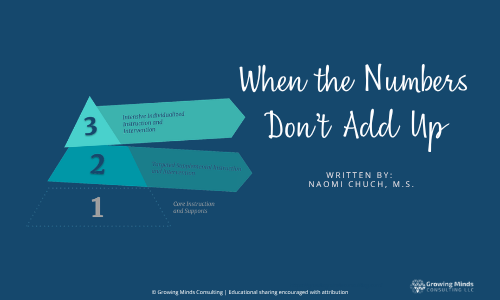
When the Numbers Don’t Add Up
When 40–60% of students are receiving supplemental support, the problem usually isn’t a lack of intervention—it’s a signal that something is breaking down in Tier 1. In this post, Naomi Church challenges a common MTSS misconception, explains why tiers describe resources rather than students, and explores what an "inverted pyramid" reveals about the health of a school's instructional system. Before adding more intervention, it may be time to examine the foundation.
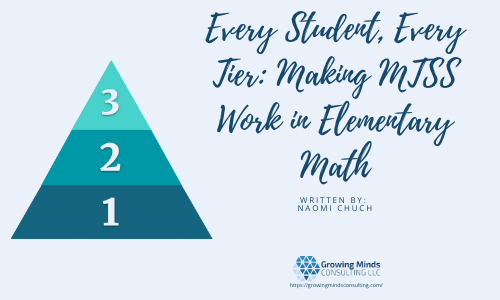
Every Student, Every Tier: Making MTSS Work in Elementary Math
MTSS isn’t just for reading. When applied to K–5 math with intention and clarity, it becomes a powerful system to reach every learner—right where they are. In this post, I break down how Tier 1, 2, and 3 supports work in math and share a free white paper for deeper implementation support.