

Grow Your Mind
Three Rooms, One Argument
When a student isn't succeeding in math, what do we change first?
Most systems answer that question the same way. We change the student's placement: a new group, a new program, a new tier, more minutes of the same thing delivered more slowly. It happens with the very best of intentions, and it rarely works, because it treats the student as the variable when the variable is almost always the design.

Guest Blog: Let Students See the Math
A failed percentages test taught Amanda Koonlaba that math isn't a locked door — it just needs more than one way in. In this guest post, she shows how arts integration helps students see math instead of only calculating it.

G.R.O.W.: A UDL Framework for Cultures Where Educators Stay
We ask teachers to design for variability in their classrooms. We rarely ask who's designing for theirs. G.R.O.W. takes the same UDL principles built for students and applies them to the adults doing the work, because the conditions that help kids thrive are the same ones that help educators stay.
When the Numbers Don’t Add Up
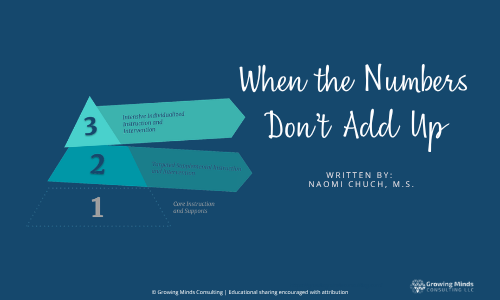
When 40–60% of students are receiving supplemental support, the problem usually isn’t a lack of intervention—it’s a signal that something is breaking down in Tier 1. In this post, Naomi Church challenges a common MTSS misconception, explains why tiers describe resources rather than students, and explores what an "inverted pyramid" reveals about the health of a school's instructional system. Before adding more intervention, it may be time to examine the foundation.

Guest Blog: You Can't Reach Everyone the Same Way
Communication breakdowns in schools are rarely about intelligence or intention. They're about people with different communication styles talking past each other — and no shared language to name what's happening. Kathleen Kennedy of the Center for Communication & Engagement breaks down four Communication Operating Structures and what it looks like to actually meet people where they are.
The Question We Only Ask Too Late
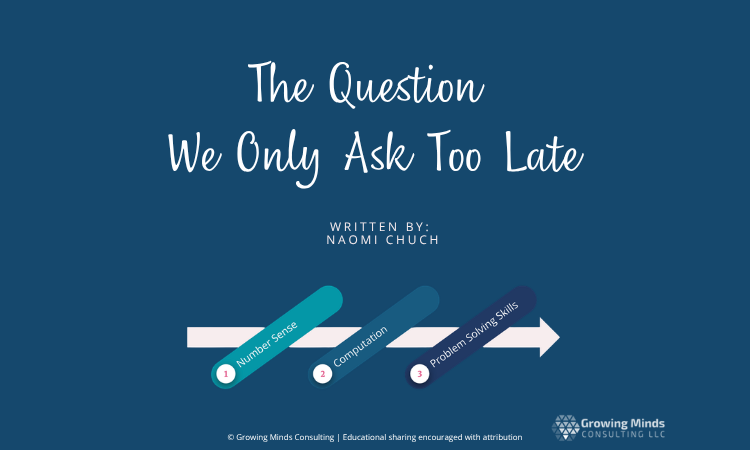
I taught first grade in a storage room. Twenty-one six-year-olds, no windows, and students with significant learning needs I had no training to address. That experience sent me on a path I'm still walking — and it keeps bringing me back to one question: why do we only ask the most important diagnostic question in math after a student has already been found eligible for special education? That question belongs earlier. For every student. Before the referral. Before the label.