
Guest Blog: Leadership Before Tools
At Growing Minds Consulting, we believe that sustainable change starts with system design - not quick fixes. Whether we're designing inclusive math instruction or coaching professional learning leaders, one core truth always holds: if the foundation is shaky, the flashiest tools will only make the cracks more visible.
In this timely guest post, Marci Houseman of Chasing Impact challenges the current AI-in-education frenzy by reminding us that leadership, not technology, sets the tone. Drawing on her work with school and district leaders, Marci outlines the three systems every organization must strengthen before AI can actually help: communication, collaboration, and capacity. It’s a must-read for any leader navigating change in today’s tech-saturated world.
Leadership Before Tools: Why System Health Determines Whether AI Helps or Hurts
by: Marci Houseman, Owner of Chasing Impact
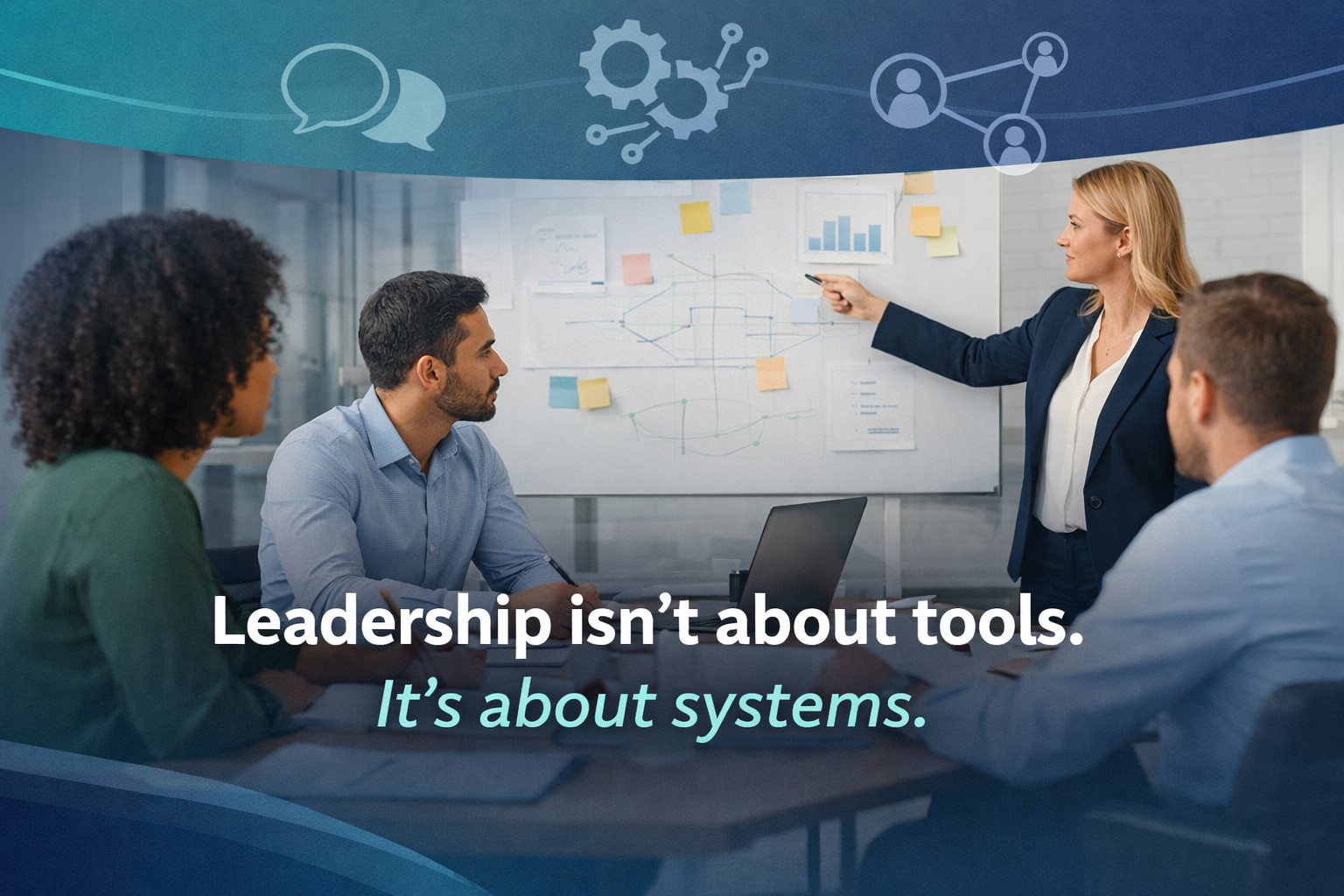
In nearly every conversation about AI in education right now, the focus lands quickly on tools.
Which platform should we adopt?
Which features save the most time?
Which tool will fix what feels broken?
But after years of working with school and district leaders, and now studying leadership systems more deeply, I’ve become convinced of this:
AI does not improve struggling systems. It amplifies them.
That means the most important work leaders can do before introducing AI has far less to do with technology and everything to do with leadership.
The Three Systems That Shape Every Learning Environment
Whether we are talking about classrooms, schools, or districts, three interconnected systems quietly determine the experience of both educators and learners:
Communication – How clarity is created, decisions are explained, and meaning is shared.
Collaboration – How people work together, make decisions, and learn from one another.
Capacity – How individuals grow, stretch, and develop over time.
When these systems are healthy, learning environments feel focused, humane, and energizing. When they are not, even well-intended initiatives create friction, confusion, and fatigue.
AI does not change this reality. It intensifies it.
Why Communication Is Always the First System to Tune
Before AI enters the picture, leaders must ask a foundational question: Do people understand what matters most—and why?
Clear communication is not about volume or frequency. It’s about alignment.
When communication systems are tuned:
Messages are memorable, not overwhelming
People understand what they are being asked to do, believe, or become
Decisions feel connected rather than random
Without this clarity, AI simply accelerates noise. With it, AI can become a powerful thinking partner, helping leaders refine messages, test clarity, and design communication that actually sticks.
Collaboration Creates the Conditions for Flow
Strong collaboration is not accidental. It is designed.
Teams experience their best work when:
Roles are clear
Meetings have purpose
Reflection is built into the process
Psychological safety allows for questioning and debate
AI can support collaboration - but only when collaboration already has a backbone. Used well, AI can reduce the cognitive load of meetings, surface insights, and model effective decision-making. Used poorly, it becomes one more layer of frustration.
The question is never “Can AI help us collaborate?” It’s “Do we have collaboration worth amplifying?”
Capacity Is Built Through the Right Kind of Stretch
Capacity is not about efficiency. It’s about growth.
Educators build capacity when they experience:
The right level of challenge
Support without rescue
Time to reflect on what they are learning
AI has enormous potential here, not as a replacement for human expertise, but as a job-embedded learning partner. When leaders are clear about the skills they are trying to grow, AI can provide practice, feedback, and scaffolding that helps educators move through challenge rather than around it.
But without clarity about the why of that growth, AI becomes just another demand.
Before AI, Pause and Reflect
Before investing in new tools, leaders would benefit from slowing down and asking a different set of questions.
Where do educators in our system experience the most friction right now - communication, collaboration, or capacity?
What feels unclear, heavy, or harder than it needs to be?When teams are at their best, what conditions make flow possible?
What do people point to when work feels energizing and meaningful?If AI could remove one burden from educators’ plates, what would we want it to free them up to do more of, not less of?
What human work matters most?
Leadership Comes First
AI is not a shortcut to better teaching and learning. It is a mirror.
It reflects the health of the systems already in place.
When leaders take the time to tune communication, strengthen collaboration, and intentionally build capacity, AI becomes something powerful: a partner in elevating human potential rather than replacing it.
That is the work worth doing - and the conversation education needs most right now.

Marci Houseman, Chasing Impact
About the Author
Marci Houseman is a leadership coach, former instructional leader, and founder of Chasing Impact. She partners with education and organizational leaders to strengthen the systems that shape daily work—communication, collaboration, and capacity—so change leads to sustained momentum, not initiative fatigue. Through her Substack, Leadership That Sticks, Marci explores how leaders can build clarity before introducing new tools, including thoughtful approaches to AI that honor human expertise and learning. Her current work focuses on helping leaders design intentional entry points for change that can be replicated across their organizations. Follow her writing at leadershipthatsticks.substack.com. You can also find her on LinkedIn, Facebook and Instagram.
