
Grow Your Mind
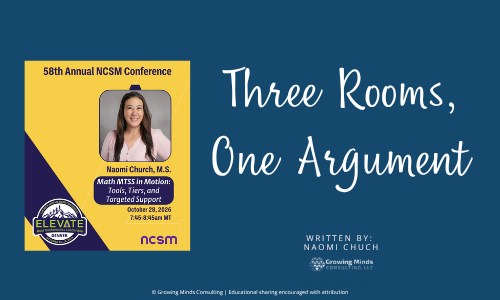
Three Rooms, One Argument
When a student isn't succeeding in math, what do we change first?
Most systems answer that question the same way. We change the student's placement: a new group, a new program, a new tier, more minutes of the same thing delivered more slowly. It happens with the very best of intentions, and it rarely works, because it treats the student as the variable when the variable is almost always the design.
G.R.O.W.: A UDL Framework for Cultures Where Educators Stay
We ask teachers to design for variability in their classrooms. We rarely ask who's designing for theirs. G.R.O.W. takes the same UDL principles built for students and applies them to the adults doing the work, because the conditions that help kids thrive are the same ones that help educators stay.
Guest Blog: The Lasting Impact of PBL on Students
Dr. Keith Adams has spent 30 years in education learning the same lesson from two very different roles — teacher and coach: sustained engagement doesn't come from compliance, it comes from ownership. In this post, he shares how Project-Based Learning, grounded in UDL principles, gave his social studies students a year-long invitation to pursue questions that actually mattered to them — and how the skills they built along the way followed them long after they left his classroom.
Guest Blog: When the System Gets Disrupted
Many classrooms look productive on the surface, but how much real thinking is actually happening? In this guest post, Robert Mayfield examines how changing the classroom environment in history and social studies can shift students from passive compliance to visible, collaborative thinking through a lens that also aligns with UDL.

Podcast: Simplifying Professional Development with On-Demand Tools
Naomi Church joins Monica Burns on the Easy EdTech Podcast to discuss how on-demand tools can transform professional learning. This episode explores the difference between PD and PL, the role of UDL in adult learning, and practical ways to design professional learning systems that actually lead to change.
Sales Enablement Needs a UDL Makeover
Most sales training doesn’t stick—and it’s not the reps’ fault. It’s the design. In this post, I show how Universal Design for Learning (UDL) can give sales enablement the makeover it needs by boosting engagement, offering multiple ways to learn, and focusing on real practice that drives results.